Section 5 of 5
After the Maps
Aftermath — occupation, reconstruction, legal reckoning and how the physical and institutional landscape was reassembled.
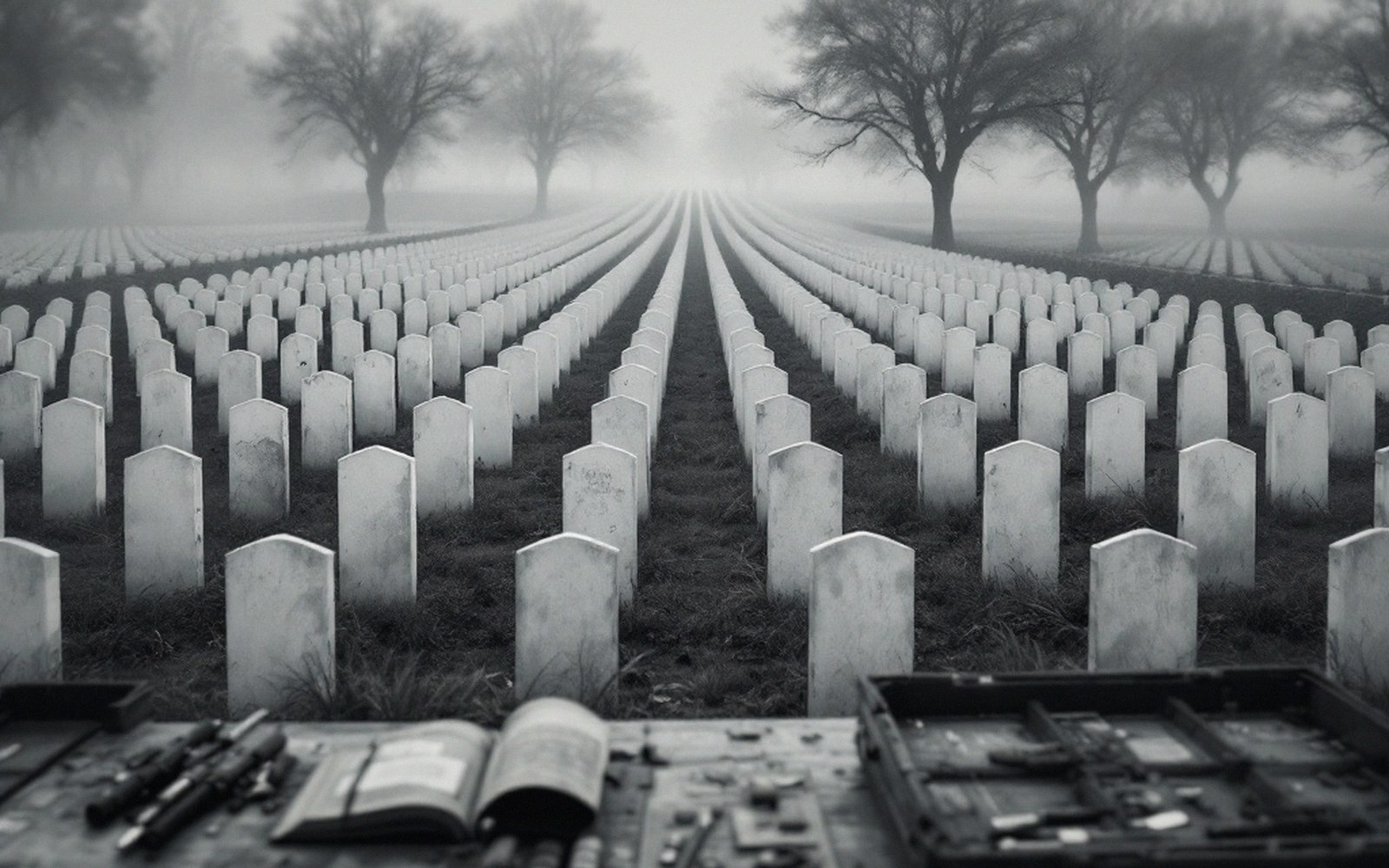
Plate 05Illustration: generated
Even rows are an administrative achievement: the aftermath was surveyed, filed and costed before it was commemorated.
Everything filed in After the Maps
-
The Occupation Zone as Administrative Problem
Four powers divided Germany at Yalta and Potsdam, then discovered they had divided four different countries.
-
Nuremberg as Procedure
The International Military Tribunal at Nuremberg was a legal instrument before it was a historical symbol — and its procedural architecture shaped international criminal law for the rest of the century.
-
What the Rubble Figures Mean
The destruction surveys of 1945–46 were working documents, not elegies — and reading them as such changes what they tell you.
-
The Displaced Persons Machinery
When German forces surrendered in May 1945, Allied planners estimated that somewhere between eleven and fourteen million displaced persons — the category covered anyone uprooted from their home country by the war — were scattered across Central and Western Europe.
Other sections