The arithmetic of keeping a division alive
Break the 300-tonne daily requirement into its three main categories and the proportions are roughly: ammunition accounts for the largest single share, typically 150 tonnes or more on active days; fuel and lubricants take perhaps 80 tonnes; rations, fodder for horses, and everything else make up the remainder. The exact split shifted with the operational tempo — a quiet sector burned less ammunition and more ration tonnage proportionally, while a major offensive could push the ammunition requirement above 250 tonnes in a single day.
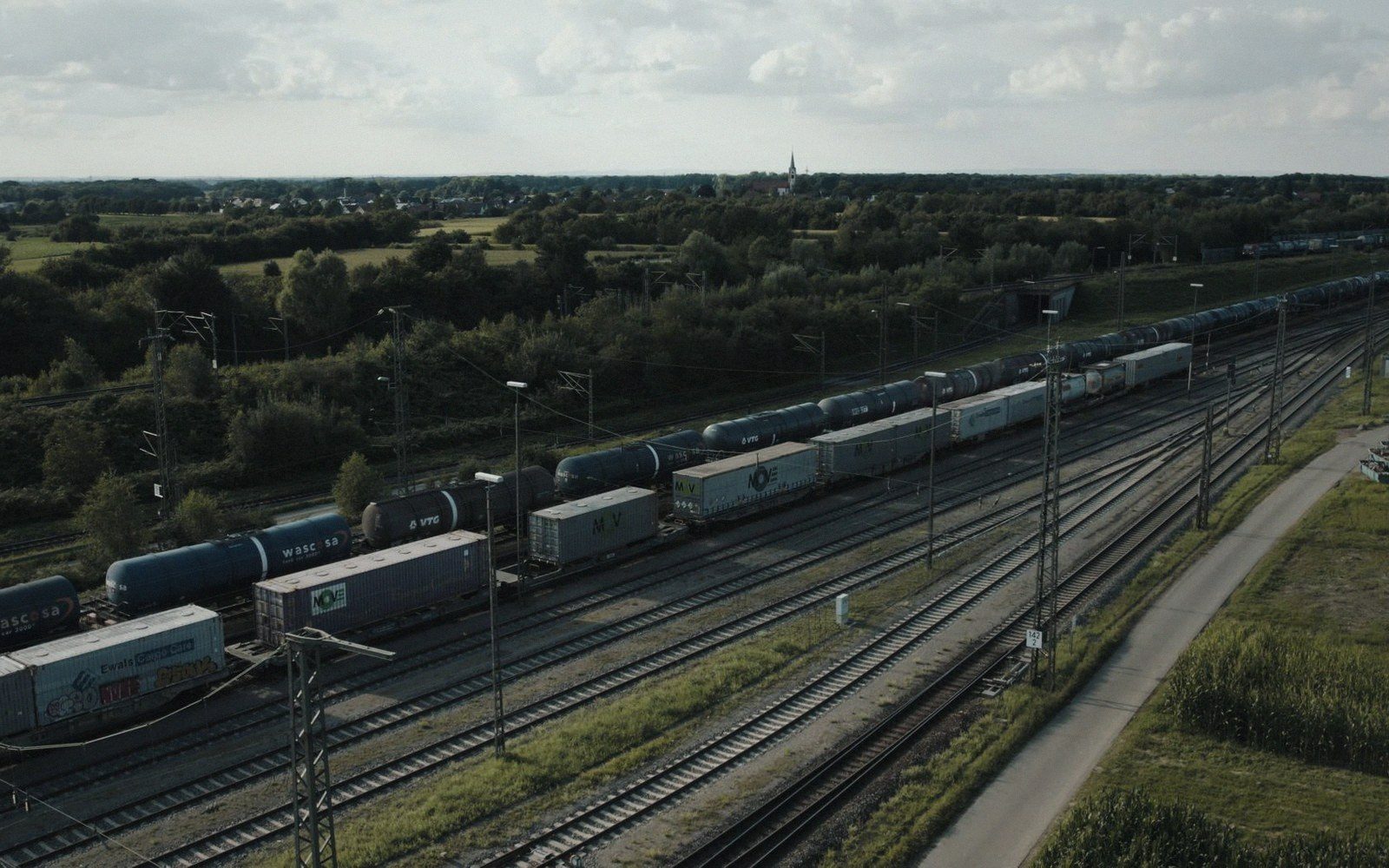
German Army Group supply doctrine on the Eastern Front translated these weights into standard freight wagons of around five tonnes nominal capacity, though actual loaded weight varied. At five tonnes per wagon, 300 tonnes required sixty wagons — one train, roughly speaking, for one division, for one day. The number is a useful rule of thumb rather than a precise specification, but it is the right order of magnitude and it is how German quartermasters actually framed the problem.
The difficulty was that the Eastern Front held dozens of divisions, the rail gauge ran wider than the German standard until track was relaid, and Soviet partisan activity routinely cut lines that took days or weeks to repair. German engineers were converting Soviet broad-gauge track to standard gauge even as forward units were already fighting hundreds of kilometres ahead of the railhead. The gap between railhead and forward division — the "last mile" that trucks and horse-drawn wagons had to cover — expanded as offensives outran the conversion crews.